Showing posts with label travel. Show all posts

Tuesday, May 05, 2009

Ancient Hedonism

Ahhh the ancient town of Hoi An, not the central jewel in Vietnam’s crown – that privilege belongs to the imperial town of Hue – but definitely one of great history as a trading sea-port for centuries, quite well preserved and wonderfully quiet. I wish I could espouse its distinctiveness some more, but now houses as many lantern shops, tailors, shoe-shops, backpacker dives, travel agents, lacquerware stores, Chinese descendants, monuments and pagodas and yummy restaurants as any of Vietnam’s major cities. Not that I’m complaining when it comes to the eating part, though.

So instead of just making you puke-green with jealousy as I know no-one really reads anything about anyone else’s holiday (at least I know I don’t thanks to a childhood memory of some distant moustached aunty’s endless slides of her Namaqualand holiday), I’ve decided to put things in list form.

So, in no particular order, here’s my list of what I did in Hoi An, and it was so good you may as well take it as a list of the “Top things to do in Hoi An”. Actually, let me rephrase that as “Top things to do in Hoi An on a limited budget, whilst constantly searching for strong coffee or a drink, with a massive propensity for eating and all things hedonistic and a very limited concentration span”, more accurately.

1) Living quarters

We stayed at the prodigiously-spectacular-on-a-small-internet-picture Southern Hotel, also known as Khach San Phuong Nam. To be honest, it wasn’t bad in real life, seeing as we got our room for half the normal price – oh the joys of internet booking! A bit out of town, but with a nice swimming pool and eerie concierges who glare at you in a unnerving manner, if you’re into that sort of Norman Bates stuff.

Poolside non-action at Southern Hotel

2) Made to Measure

We perused the cloth market and found the same lady Sarah had her clothes made at three years ago (such good quality she can still wear all of the clothes to this day). Check out Ly Ly’s shop – they’ve got high quality cloth, speak English well, have everything tailored by the next day, are happy to readjust all the clothes and are way cheaper than the kazillion tailor shops peppering the streets of Hoi An. I got two dapper suits, two shirts and a kimono tailored for about $125! The one suit is a funky pin-striped one-vent suit with slightly flared sleeves and legs, two buttons and an elongated collar. The kimono is just plain porno: full-length dragon-patterned black silk with red sash and lining. Think Triad leader meets the Don meets Ron Jeremy and you’ve got the idea. I hope I don’t pick up weight otherwise it would all be futile…

Inside the cloth market

The fabric of life

3) Don't sell your sole, just get new ones made

We were on a “let’s get random stuff tailored” frenzy so we got some shoes and boots made. I got a pair of work shoes as I’ve been wearing the same shoes to work that I wore to my Matric Dance eight years ago. Flappity flop. Sad, I know. The new ones are nice comfy, black leather slip-ons with white stitching.

4) Hobbit treatment

As we were getting our feet measured another girl wandered up and said: “You should get your feet shaved”. No, not in the hobbit sense of the word as I don’t have hair sprouting from my little appendages, but I do have a callous or two from playing football which she wanted to shave the dead skin from. Persuaded and intrigued, we headed over to her beauty salon where, thanks to my sexual security I’m not afraid to say, I received a bit of a foot wash and pedicure followed by the eerily pleasing dead-skin shaving. The old lady who did it joked afterwards that the dead skin she’s shed into a bowl of water looked like chao or rice soup/gruel…erm.

5) Food, glorious food!

Needless to say, my girlfriend and I both having an insatiable penchant for eating and drinking, thus we gluttonised our way through Hoi An. First we called on Morning Glory Restaurant, run by a local celebrity chef called Ms Vy who runs three other eateries of note in the ancient town; White Lantern, Mermaid and the Cargo Club across the road. Fantastic and affordable specialties and traditional fare like the prawn curry that would definitely have had us coming back if we had another day or two in town.

Instead, the bestowed our humble patronage upon Mango Rooms the following night. Fusion at its finest, this place is worth its reputation (and price). We had a nice bottle of the house white with the Tropical Lush Salad to start: seared tuna with orange/ginger/soy dressing, greens and herbs, mustard sprouts, orange slices and watermelon cubes. As a main, I had the pan-seared chicken breast marinated in lemongrass, garlic and curry with a yummy pineapple/tomato/ginger sauce with garlic asparagus. Sarah had the pan-seared tofu cubes seasoned with other yummy local ingredients and both were pretty awesome. Go there. Go there now.

We also tried the local specialties of banh vac (white rose), hoanh thanh (fried wontons with a sweet and sour sauce) and cao lau (a kind of fried pork-ish noodle soup with crouton-like thingies) a few times. The banh vac was similar to southern nem, glutinous rice shaped like a rose encasing a tiny shrimp – kind of bland not bad with nuoc cham (dipping sauce). The hoanh thanh was great as was the cao lau, except for occasionally finding a leafy herb that we unaffectionately refer to as “feet” – a broad, dark green leaf taxi drivers in Vietnam like to put bushes of in the back of their taxis for some inexplicable reason, causing their cars to smell like old, mouldy feet. Unfortunately it also finds its way into some dishes and requires a diligent eye to fish them out before consumption.

A tasty bowl of cao lau

Fried wontons with sweet and sour sauce

6) Learn to cook

We also went to Sakura Restaurant one night and were impressed by their mix ‘n match cooking class they offered and the friendly, personal service of their manager. We tailored a menu of five dishes Sarah wanted to learn to cook (and secretly so did I) and were invited to come learn from their chef Duc the next day. You’ll have to wait for the next post on the results, which were spectacular.

Cooking course in action at Sakura

7) Beach living

We took the bike out to Cua Dai Beach, about 5 kms from the centre, hired a beach chair, ordered some food and a drink, whipped out our books and dozed for a couple of hours. Perfect – except for the food which made both of us pretty sick for days!

8) All-marbled out

We rented a bike early on our last day and headed out to the fabled Marble Mountains – five marble peaks jutting out of the flat surrounding countryside half way between Danang and Hoi An. A difficult climb is rewarded with some beautiful caves, Buddha statues, shrines, caves, views and some quirky and disturbing Hindu statues. Sadly enough, the marble from the area has been exploited to such an extent that the local producers have to order marble from China to sell to buyers!

Inside Marble Mountain

Yes, it was truly three days and nights of Ancient Hedonism. Highly recommended!

Wednesday, February 11, 2009

Borneo (Part 2)

The Malaysian province of Sabah, whilst one of the poorest economically, is a veritable wealth of natural beauty. Stretching from the capital Kota Kinabalu in the west, around the Tip of Borneo to the north and along the east coast to Sepilok and Sandakan. Its biodiversity, from virgin rainforests to unexplored mountain valleys is a city slicker's perfect antidote.

Well, you may rightly ask, if we didn’t get up to any of that Indiana Jones nonsense, what did we do in Borneo? We got what we came for and what we came for was off the coast of Semporna. In two words:

Island style.


Does it turn you a darker shade of green? It should and if it doesn't you're a heartless, jaded and cynical person whose time on earth is best spent ruminating in your basement, burning effigies of your boss and throwing darts at a blown-up, vandalised photo of his face.


Waking up to a cup of kopi in a wooden stilt house built out over the Celebes Sea on Pulau Mabul, wondering which tropical island’s world famous coral reef or sand bottom to snorkel or scuba.

Watching colourful and weird fish you’ve only ever seen in aquariums, white-eyed moray eels and giant green turtles, all from the comfort of your balcony or kicking your feet up, with a smuggled 26-peso Filipino Red Horse beer and a game of cards.

Or just throwing your towel on palm tree-clad Pulau Sibuan with a good book and only being disturbed by one of the island’s 20 inhabitants asking if he could fetch you a coconut from 50 feet above your head.

Or being 50 feet under the water off Pulau Sipadan floating in an outer-space-like world with reef sharks and prehistoric turtles the size of little cars, with nothing above but bubbles and below 600 metres of murky, inky wetness.

So, we didn’t get to touch an orangutan. They keep those funny primates a good distance from tourists. We didn’t climb Mount Kinabalu. We didn’t get to white-water raft the renowned rapids of the Padas River. We did, however, get what we came for: a good tan and the kind of holiday which I can recommend to anyone looking to get as far from stinky Saigon as possible.

Friday, February 06, 2009

Borneo (Part 1)

Summiting was hard enough, with limited rations and the last dregs of our water bottles burning in our backpacks, but the descent from 4000 metres was another kind of torment altogether. Kinabalu’s thirty degree slope tore at our calf muscles and our resolve as we made our way down into the unexplored heart of the equatorial jungle. Only seven of the original party of ten had made it back. One had succumbed to a bowel-ripping case of Chagas disease on the way up, another to a sever and debilitating bout of Buruli ulcers and the final victim and mistepped the path leading to up to Lowe’s Peak (which turned out to not be so low after all) plummeting and bouncing spectacularly before he disappeared into the clouds below.

The incessant buzzing of throngs of flies was wreaking havoc with our fevered minds. The flies were competing with an army of inch-long leeches slowly making their way about our numerous cuts and blood-smeared shins. Combined with a ground temperature of 37 degrees and the pure, 100% humidity, it was like being spit-roasted over an open bonfire and tumbling down the mound of coals, having your legs seared with glowing-hot cattle-prods and you nether regions simmering in a stew seasoned with Bushman’s Fire “Dynamite” sauce (the one that makes the thermometer on the side of the bottle burst like an adolescents’ acne) – all at the same time. But no-one said the search for the mythical headhunters of Borneo was going to be easy. The unforgiving territory of Sabah, “The Land under the Wind”, stood in our way. Right now, it felt like “The Land under the Toaster”. The big Toaster. Directly under it…

I wish it was so! Oh how dearly I long for such a grand, colonial Conradesque tale of exploration and adventure, and wild loin-cloth wearing, spear-wielding natives – minus the testes stew part. I’ll own up. We never climbed the mountain. We could have, but didn’t. We didn’t delve head first into the jungle. We wanted to, but couldn’t. The trails were closed – how were we to know February was in the middle of monsoon season which would give rise to already treacherous jungle treks being insurmountable. Well, yes, there are guidebooks readily available which warn of such folly, not even to mention the internet…bah. Needless to say, we didn’t find the infamous headhunters either. Nor any heads. Not even one, shrunken, shriveled cranium, except for those we brought along ourselves.

What we did find, however, was even wetter, but not of the green and sweaty, variety, but of the bluest crystal kind. Something others toil their whole lives for, often selling body parts and in-laws to experience: Island living. Mmmm.

Some pics in Part 2.

Thursday, April 03, 2008

Nepal Part 1: In the Valley of Gods

Namaste! This short greeting encapsulates Nepal. It surrounded us from the moment we got off the plane in Kathmandu and headed out into the freezing city, full of anticipation and relief after weeks and months of waiting, till the moment we dragged our weary, frozen bones back onto the plane 15 days later.

“Namaste! Where you go, sir? Want taxi?” “Namaste, want to go trekking?” “Namaste, come inside my shop, take a look.” “Namaste, want some hash?”

It literally means “I see or recognise the god inside you”. Sarah, I can understand, but me? What the hell do they see in me? Anyway, the greeting is everywhere. I think on any given day in Nepal you could find yourself muttering this phrase, depending on your mood, amount of eye-contact and social aptness, anywhere from a hundred to a thousand times a day.

Back to Kathmandu – the Valley of Gods. The city with its population of about a million denizens is nestled in the Kathmandu Valley, with Thamel, the tourist/backpacker area on the northern edge of the urban centre, Swayambhu, the Monkey Temple, away to the west, Patan City down to the south and the airport to the east, beyond which stretches the city of Bhaktapur. Driving down into the city bowl, we were met by a dusty haze hanging over the city reminiscent of a desert city like Cairo, despite the mind-numbing cold that we quickly had to get used to. We were warned that the traffic in Kathmandu was really bad, but coming from Ho Chi Minh City, it was more like a walk in the park on a fine Sunday afternoon.

Thamel, where we and most other tourists stayed, is a bric-a-brac mismatch of little bricked hovels (no more than hobbit hole-in-the-walls), tall, multi-storeyed guesthouses with rooftop terraces, and bright shops selling everything from Tibetan prayer flags, thangkas, trekking gear (think Gore-tex and North Face), Gurkha Khukri knives, yak wool and pashmina and a cornucopia of trance and hippy gear: hackey sacks, jester beanies, clothes, bongs, woven socks – all in Joseph’s Technicolor dreamcoat hues. If you’re a trancemonkey – this is Heaven. Thamel is everything you want in a tourist area – so much so that its possible to actually lose track of time and dawdle in this Middle-Earth meets Alice in Wonderland meets Alien Safari for years before realising it (the number of beared, dreaded, dazed old-timers we saw testified to this scary fact). The range of food is awesome too. From Nepali daal bhat, to yak steak, buffalo chilli balls, to Western pizzas and cappuccinos. Oh and one thing we really miss and need in Vietnam, which the Nepalis just get right: bakeries with sugar-free Western-style breads, croissants, pretzels and other goodies. Yum.

Walking down through the winding, potholed alleys, you’ll find yourself nearing the stupas of Durbar Square and, blinking, and rubbing the Wonderland crust out of your eyes as if you’ve just climbed back out of the rabbit hole into the bright sunlight, you’ll see more of the real Kathmandu, more colourful saris, and more poverty. The Square – the old court of the royal palace – is home to temples dedicated to a number of gods and goddesses, including the Living Goddess Kumari. Unfortunately foreigners are not allowed to enter the living quarters of the Kumari and have to vie for a quick glimpse through the temple window.

Near the Square is Freak Street – the 1960s home of the tousle-haired, tie-dyed hippies seeking enlightenment in Shangri-la, now just a skeleton of its bong-toking past, but still worth a visit.

The further you move away from the centre of Kathmandu, the more prevalent the poverty and pollution becomes, and as you climb out of the valley on winding roads, the smog lies low over the city. A beautiful city with an ugly face, its easy to get lost in Kathmandu without exploring the rest of this beautiful country.

When we were there, political turmoil with their upcoming elections (April 11) caused a lot of tension, with petrol stations being closed in answer to fuel hikes, daily power black outs due to load shedding and political rallies, especially by the Young Communists League, blocked traffic in the city. The newspapers were rife with stories of violence and threats in the rural, pro-Maoist strongholds and the army were on constant vigil. The election next week will decide the fate of the nation, as well as its out of favour king, as the electing of a new Constituent Assembly means their will be a rewrite of the constitution. I wish the best for this beautiful country and its beautiful people.


Souvernir shop on the streets of Thamel

A pipe shop on Freak Street

Joseph and his dreamcoat shop

Thangka Shop in Thamel


Rickshaw and monk

Woman coming out of a hobbit-hole

A religious festival in Durbar Square


A stupa in Durbar Square


Candy-floss monks


Kathmandu through Tibetan prayer flags
Tuesday, March 11, 2008

Postcard Angkor vs Angkor What?!

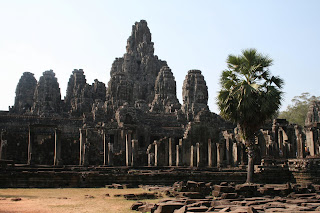
This is it. Rising out of the steaming jungle as you tuk-tuk your way past fruit purveyors, tourist buses and other tuk-tuk’s, the five towers of Angkor Wat jut out beyond the safeguarding temple walls, just beyond the massive moat. This is it, you think to yourself, one of those rare Indiana Jones moments, where you get to scramble over timeworn, venerable blocks of Khmer architecture in the overgrown Ta Prohm temple, or push the left eye of a Naga statue or Bayon head to reveal a secret passageway which leads you the discovery of the Hall of Bodhisattvas…oh behold the wonders of Angkor!

A World Heritage Site nearly a millennium old, regal Angkor Wat has stood the test of time to watch nations rise only to fall again and has stood proudly as religions have come and gone. Weather-stained massifs watch over the jungle of Siem Riep as sentinels and guardians, while intricately designed passageways and walls pay homage to Hindu and Buddhist mythology.


The austerity and monumental scale of the Angkor Temple Complex are palpable as hours, even days, are whittled away, inspecting every nook and cranny.


But, alas, you are not alone. No, it’s not the shade of Vishnu or Kali still haunting Angkor Thom or the spectres of long-forgotten Buddhist monks haunting the fields and buildings of Angkor. It’s something else, it’s…other people like you: tourists.


And this is the downside. I was first astounded by Jon’s exposĂ© on the nature of the Angkor Temple Complex and now I’ve seen it for myself. This is the Angkor they don’t want you to see. Thousands of tourists descend on the Temples daily. This is the jostling, elbowing, kicking, biting Angkor. The souvenir-touting, Canon-clicking, elephant-riding, get out of my picture Angkor. You won’t find a picture of this one at any of the gazillion postcard sellers around the temple complex. This is commercialism at its sweaty, dizzied height. The, reduced, scarred essence of greed.


Peruse a detailed, weathered bas-relief, follow the design around a corner and *kadonk* bump into the lens of another Pentax-touting fellow. At times you just wish everyone else would disappear and leave you alone to explore in peace.


Erosion has caused large sections of the temple complex to be closed temporarily for reconstruction and in some places, sadly, permanently. Monks wander around with mobile phones and digital cameras (so much for discarding all your worldly possessions).


It’s a circus; nearly as much so as the town of Siem Riep. The “Angkor” brand has been cashed in on – there is even an Angkor Mart – with a very nice selection of imported chocolates and a range of French and New World wines to warm the heart of any wine enthusiast. Angkor this, Angkor that, it was a kind of overkill, yet inevitably so I guess, looking at the laws of economics: supply and demand. I can just see Smith’s invisible hand reaching for a cold Angkor quart, or changing the setting on his Cybershot.


Despite Angkor’s “I’m lovin’ it” commercialism, it remains – hidden beneath the mountain of souvenir t-shirts, row upon row of fake antiques and beneath the froth of Siem Riep’s cappuccinos and latte’s – one of the world’s most important historic areas for a number of reasons and hopefully this significance will not only be a footnote at the bottom of an Angkor advertisement.